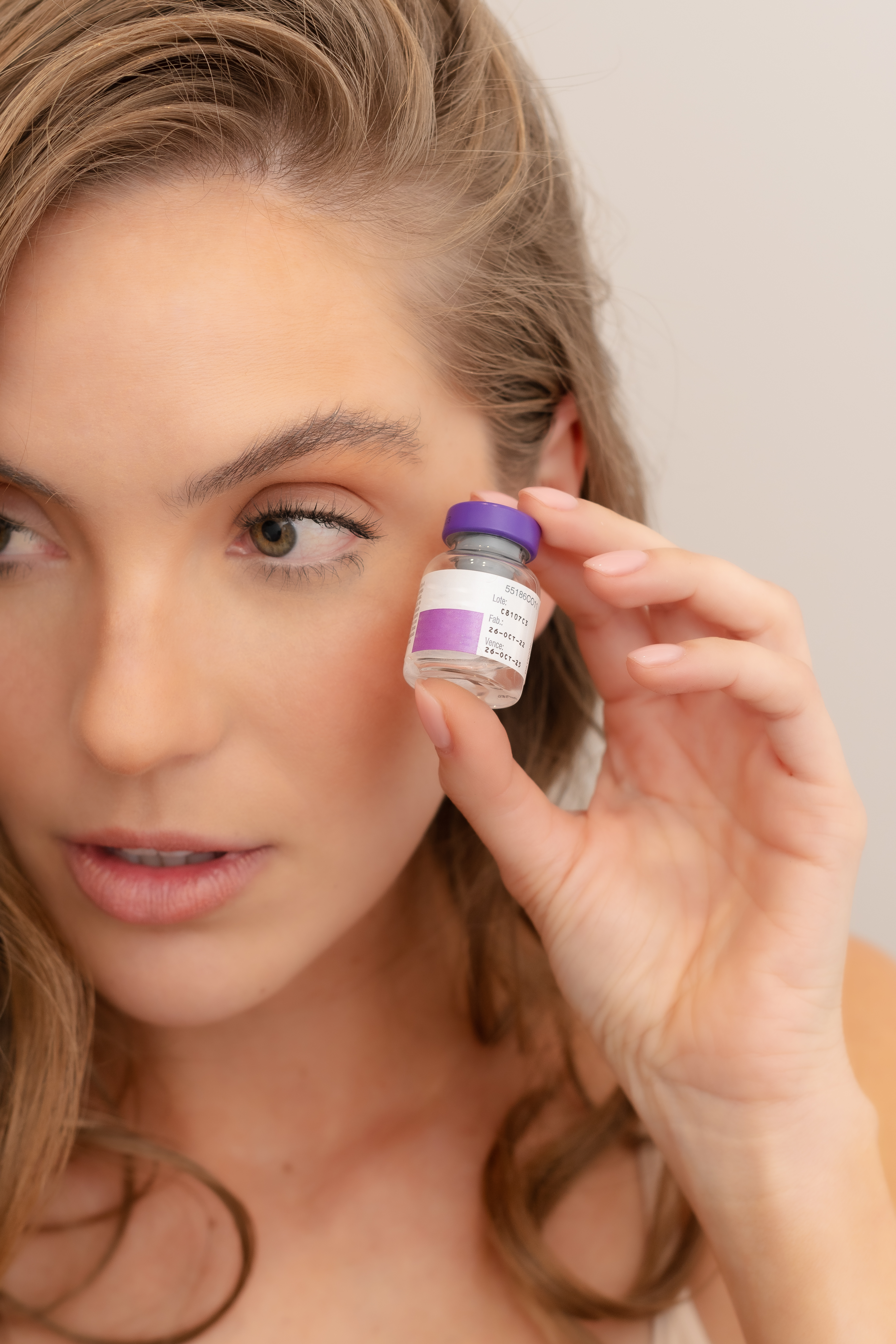
La toxina botulínica es el tratamiento estético más realizado en el mundo. Pero también es uno de los más rodeados de mitos. ¿Te deja la cara congelada? ¿Es peligroso? ¿Genera adicción? Hoy desmontamos cada mito.
¿Qué es la toxina botulínica?
Es una proteína purificada producida por una bacteria llamada Clostridium botulinum. En medicina estética se aplica en dosis muy pequeñas y controladas para relajar temporalmente músculos específicos. Al relajarse el músculo, la piel sobre él deja de marcarse — y las arrugas desaparecen.
La FDA y el INVIMA la aprobaron desde hace más de 20 años para uso estético. Es uno de los procedimientos más estudiados de la medicina moderna.
¿En qué zonas se aplica?
- Frente: arrugas horizontales
- Entrecejo: las "líneas de la rabia" o glabela
- Patas de gallo: alrededor de los ojos
- Bunny lines: arrugas del puente nasal al sonreír
- Mentón: aspecto de "piel de naranja"
- Sonrisa gingival: cuando se ven mucho las encías al sonreír
- Bruxismo: relajación de los maseteros (también afina el rostro)
- Hiperhidrosis: sudoración excesiva en axilas o manos
Mitos vs realidades
MITO #1: "Te deja la cara congelada"
❌ Falso si lo aplica un médico calificado. La toxina botulínica correctamente aplicada relaja músculos específicos sin paralizarlos por completo. Sigues haciendo expresiones, sonriendo y comunicando emociones. La cara "congelada" es resultado de aplicaciones excesivas o en zonas equivocadas.
MITO #2: "Una vez empiezas, no puedes parar"
❌ Falso. No genera adicción ni dependencia física. Si dejas de aplicarte, los músculos vuelven a su movimiento normal en 3-6 meses y las arrugas reaparecen — pero NO peor que antes. Lo que pasa es psicológico: a la gente le gusta el resultado y quiere seguir.
MITO #3: "Es peligroso"
❌ Falso cuando se aplica correctamente. Las dosis estéticas son milésimas de la dosis tóxica. Con miles de millones de aplicaciones globales, los efectos adversos serios son raros. Los más comunes son leves: hematoma, dolor de cabeza pasajero, asimetría temporal (que se corrige).
MITO #4: "Es solo para mujeres mayores"
❌ Falso. Cada vez más pacientes jóvenes (25-35) usan toxina botulínica preventiva en pequeñas dosis para evitar que las arrugas se "marquen" en la piel. Y los hombres son cada vez más usuarios — especialmente en frente y entrecejo.
MITO #5: "Si te lo aplicas en la frente, se te caen los párpados"
❌ Solo si lo aplica alguien sin formación. La ptosis palpebral (caída de párpado) es una complicación rara que ocurre cuando se aplica en zonas incorrectas. Por eso el médico que lo aplica debe ser especialista.
REALIDAD: "Es preventivo si lo empiezas joven"
✅ Cierto. Aplicado en pequeñas dosis a partir de los 25-30 años, la toxina botulínica previene la formación de arrugas profundas. La piel no se "marca" tanto cuando el músculo no se contrae con la misma fuerza.
REALIDAD: "Tarda unos días en hacer efecto"
✅ Cierto. No es inmediato como el ácido hialurónico. Empieza a notarse a los 3-5 días y el efecto máximo aparece a los 14 días. Por eso siempre te citamos a las 2 semanas para hacer ajustes si es necesario.
REALIDAD: "Dura entre 3 y 6 meses"
✅ Cierto. El promedio es 4 meses. Pacientes con metabolismo rápido o que hacen mucho ejercicio pueden notar que dura un poco menos. Con aplicaciones constantes durante 1-2 años, el efecto puede empezar a durar más por el desuso muscular.
¿Cómo es la sesión?
- Valoración: tu médico analiza tu rostro en reposo y en movimiento
- Marcación de los puntos exactos a tratar
- Limpieza con clorhexidina
- Aplicación con aguja muy fina (15-30 min)
- Recomendaciones: no acostarse 4 horas, no hacer ejercicio fuerte 24h, no masajear la zona
¿Quién no puede aplicarse?
- Embarazadas y lactantes
- Personas con enfermedades neuromusculares (miastenia gravis, ELA)
- Alergia a los componentes
- Infecciones activas en la zona
¿Cuánto cuesta la toxina botulínica en Almaluna?
Cobramos por unidades aplicadas, no por zona — así pagas solo lo necesario para tu caso particular. Las cantidades varían según la profundidad de las arrugas y la fuerza muscular. En tu valoración (gratuita) te decimos exactamente cuántas unidades necesitas y el costo total. Contáctanos por WhatsApp para más información.